Yalla at BRISMES 2026 in London
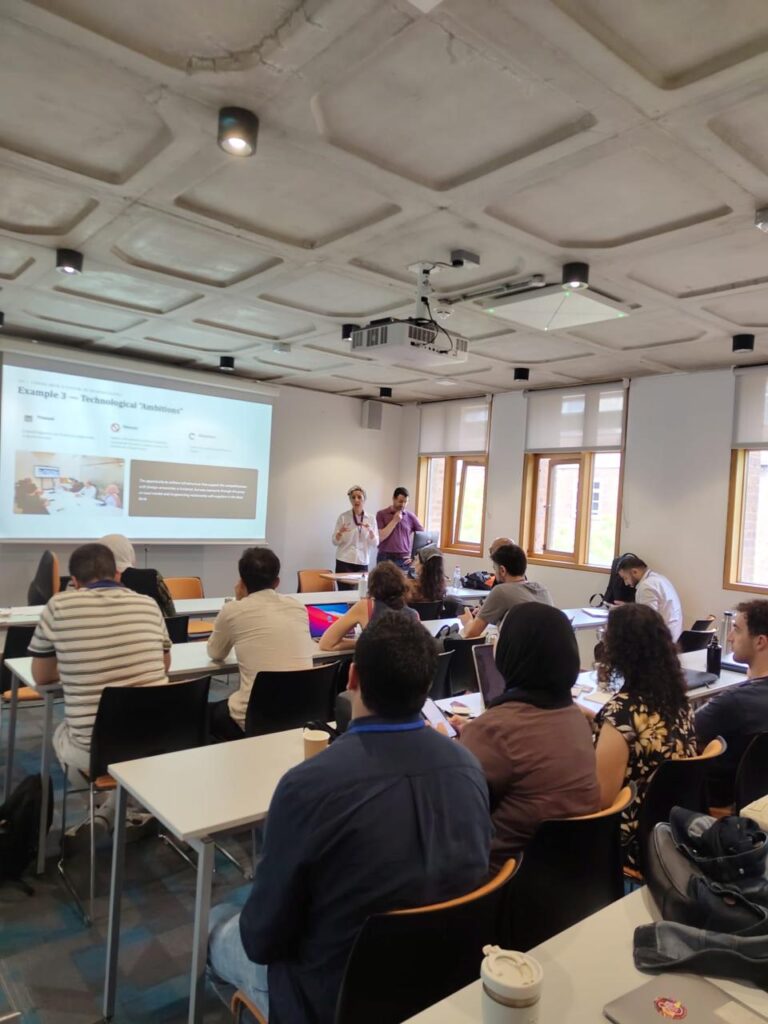
Alessandra Gola and Abdalrahman Kittana took part in the BRISMES Annual Conference at SOAS, with a roundtable on Gaza's reconstruction and a paper on urbicide in Palestinian cities.
In June 2026, Alessandra Gola and Abdalrahman Kittana of the Yalla Project took part in the annual conference of the British Society for Middle Eastern Studies (BRISMES), held at SOAS University of London from 23 to 25 June. This year’s conference was themed “War, Empire and Sabotage in an Age of Genocide.” BRISMES is the largest annual UK gathering of scholars and practitioners working on the Middle East.
On the opening morning, 23 June, Abdalrahman co-organised and took part in the roundtable “Reconstruction as Liberation and the Politics of (Re)building Gaza.” The roundtable looked at the opposing paths built into Gaza’s reconstruction: Palestinian-led initiatives grounded in local priorities, such as those led by Gaza’s municipalities, against donor-driven rebuilding that works as a tool of pacification. It also asked how external actors can engage ethically without reproducing paternalistic or colonial relations, and highlighted plans that place liberation at the centre of rebuilding. Chaired by Catherine Chiniara Charrett (University of Westminster), the roundtable brought together Akram Lilja (University of Palestine and Uppsala University), Anwar Awadallah (Islamic University of Gaza), Howayda Al-Harithy (American University of Beirut), Yara Salem (former General Director of Taawon) and Abdalrahman Kittana (Tampere University).
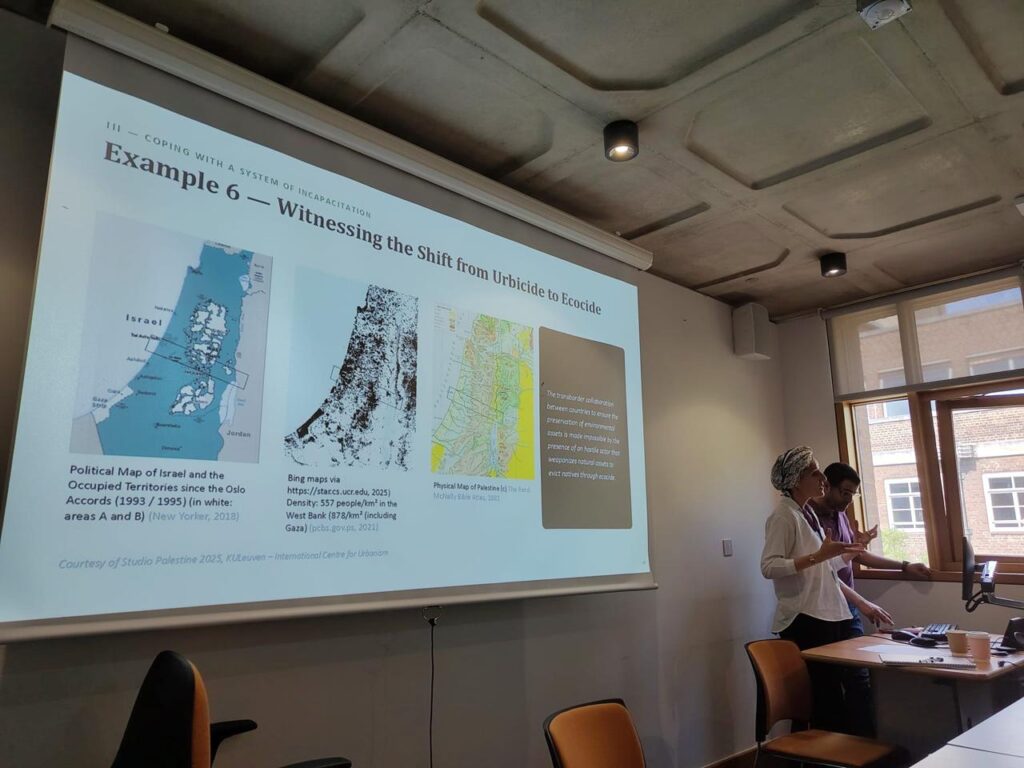
Later the same day, Alessandra and Abdalrahman presented their paper “Urbicide Beyond Destruction in Palestinian Cities” in the panel “In and about Palestine: Architecture of Control, Destruction, and Resistance,” chaired by Nama’a Qudah. The paper argues that urbicide in the West Bank operates even where buildings are left standing, by systematically incapacitating Palestinian agency for development. Drawing on their own experience in the field, they showed how this incapacitation reaches even well-resourced projects sponsored by international and European organisations, and why it should be understood as a structural condition rather than a lack of knowledge or resources.
Both contributions build on what we have learned in Nablus: that cities under occupation are not only destroyed through bombs and bulldozers, but also through the steady obstruction of everyday life and of people’s ability to shape their own future.